Tech Explorers: Physical Computing

Regular price $5,511.00
Regular price $0.00 Sale price $5,511.00
Grades 6-8

Tech Explorers: Physical Computing—Meet Seeker, a Robot on a Mission

Regular price $5,511.00
Regular price $0.00 Sale price $5,511.00
Shipping calculated at checkout.

⚠️ Clearance Item - Final Sale

All clearance sales are final. No returns, refunds, or exchanges.

SKU: SKU:93935

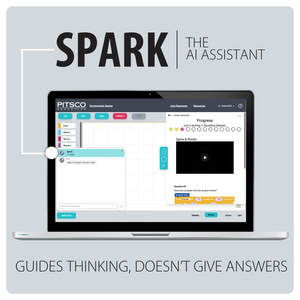
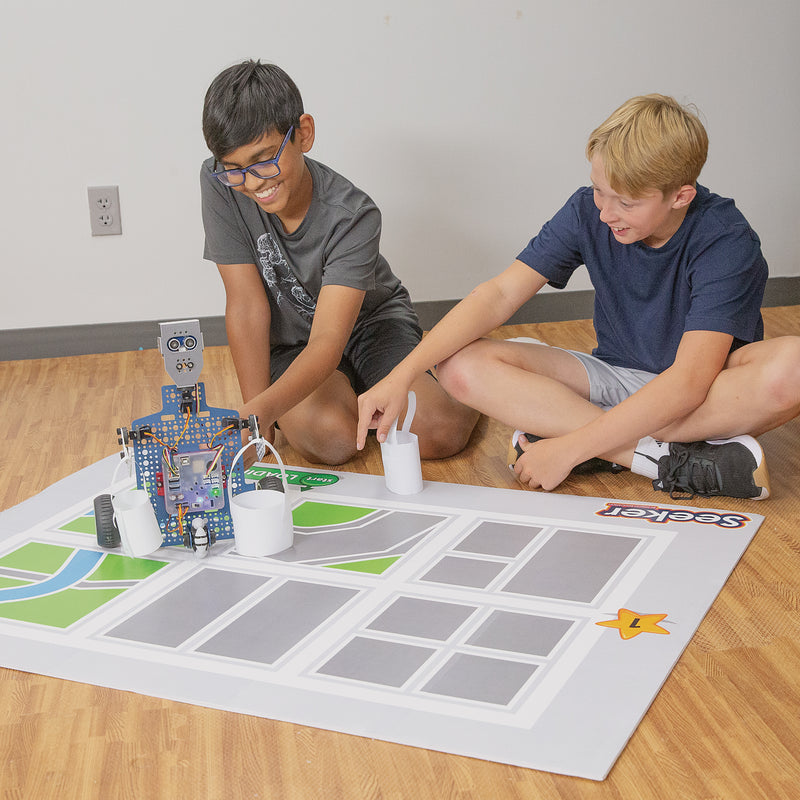
Students bring robotics to life through hands-on exploration of hardware, software, and intelligent systems using the Seeker robot. Forty-three class periods progress from circuitry and programming basics to designing robots that solve real-world challenges across logistics, space exploration, and agriculture. Cybersecurity lessons developed with CYBER.ORG are built into the curriculum, and the program is ready for Spark the AI Assistant, an optional add-on that helps students work through code problems without handing them the answer.

Ships in approximately 3–4 weeks.

Students Served: 24 students
Curriculum Included
Curriculum Included
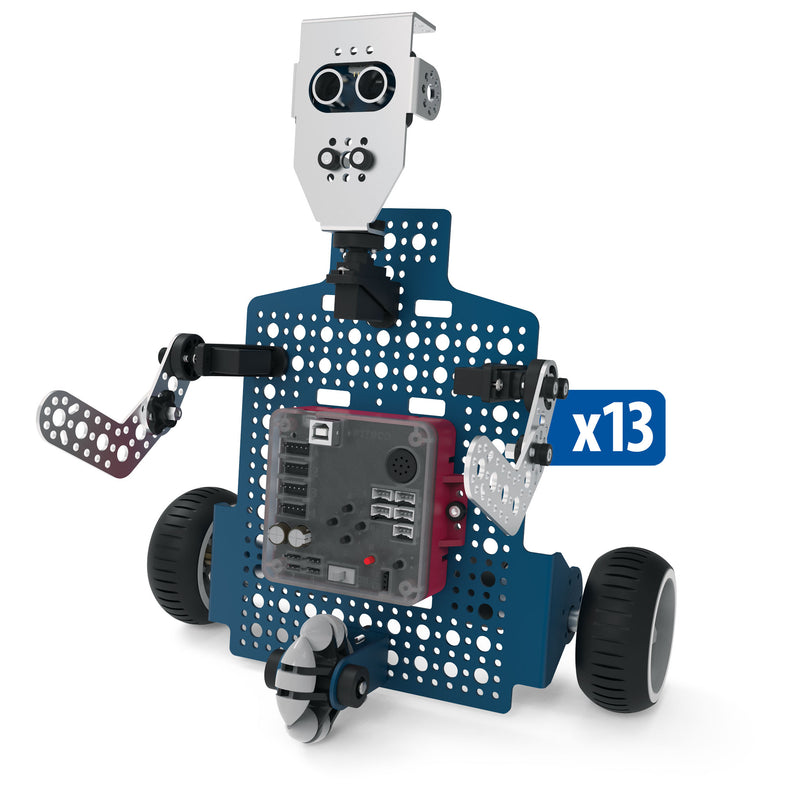
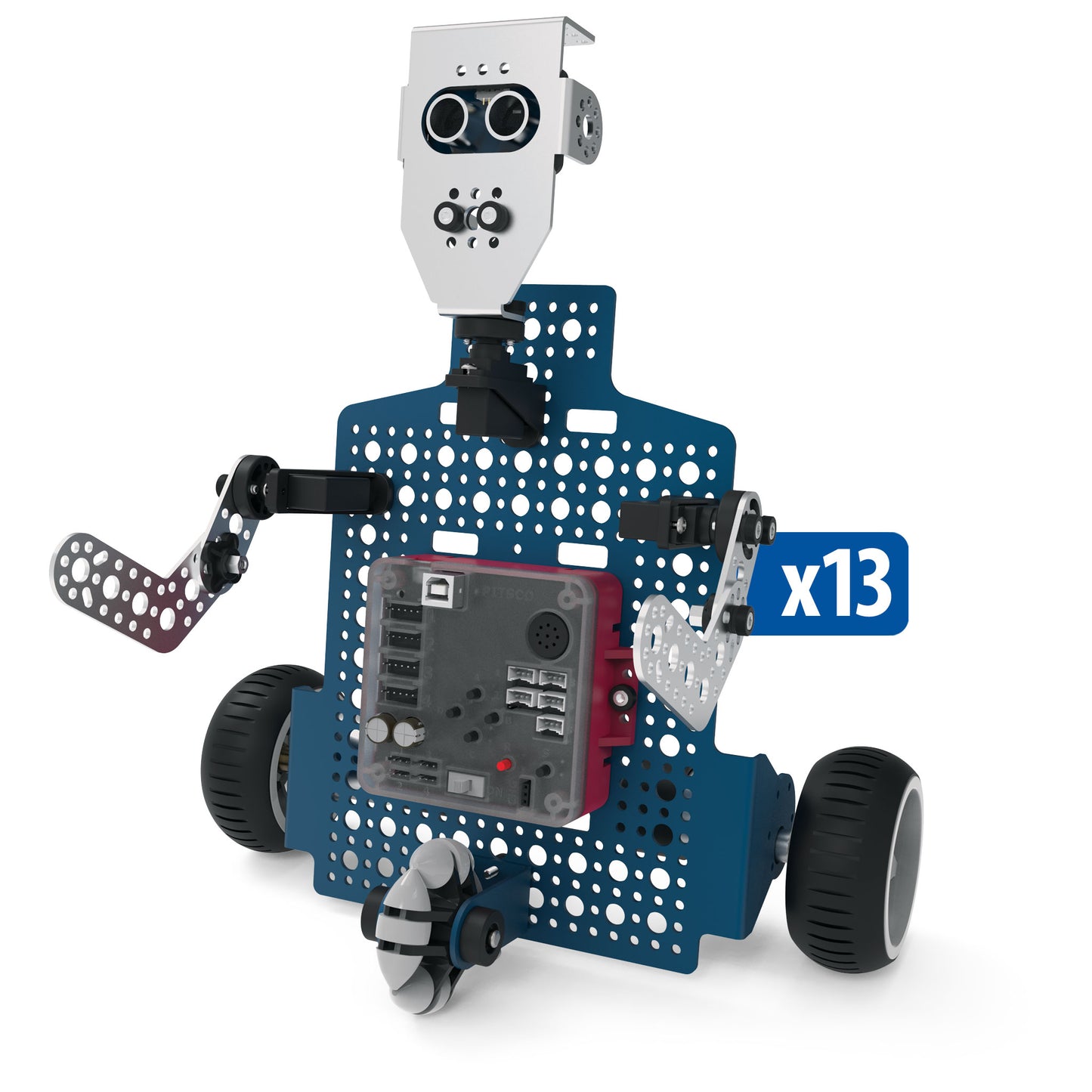
Includes 13 Seeker Robots
Cybersecurity Lessons Built In
Works with Spark the AI Assistant
WHAT'S INCLUDED
  • 13 Seeker robots
  • Building elements pack
  • Hardware pack
  • Sensors pack
  • Tool pack
  • Battery chargers
  • USB cables
  • Deck of color cards
  • Color cylinder templates
  • Access to the web platform and curriculum
  • Digital student and teacher resources
SPECIFICATIONS & SAFETY
  • Quantity: 1
  • Students Served: 2 students per Seeker robot
  • Curriculum Hours: 40+ hours
  • The Pitsco Learning Portal is 100% web-based
  • Browser Compatibility: Google Chrome and Microsoft Edge
  • Device Compatibility: Windows, Chromebook, and Mac
View full details
Tech Explorers: Physical Computing

Tech Explorers: Physical Computing

Regular price $5,511.00
Regular price $0.00 Sale price $5,511.00

Frequently Bought Together

1
Spark AI Assistant
+
2
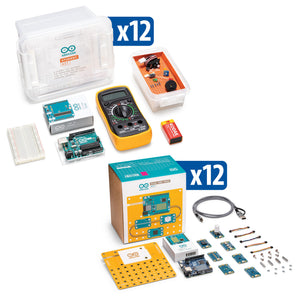
Two Arduino kits with electronic components and packaging
+
3
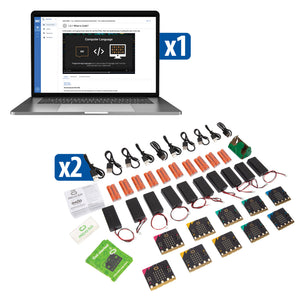
Educational technology kit with laptop, micro:bit boards, and accessories

Total: $6,083.00 (3 items)
Tech Explorers: Physical Computing

Build. Code. Solve. Explore.

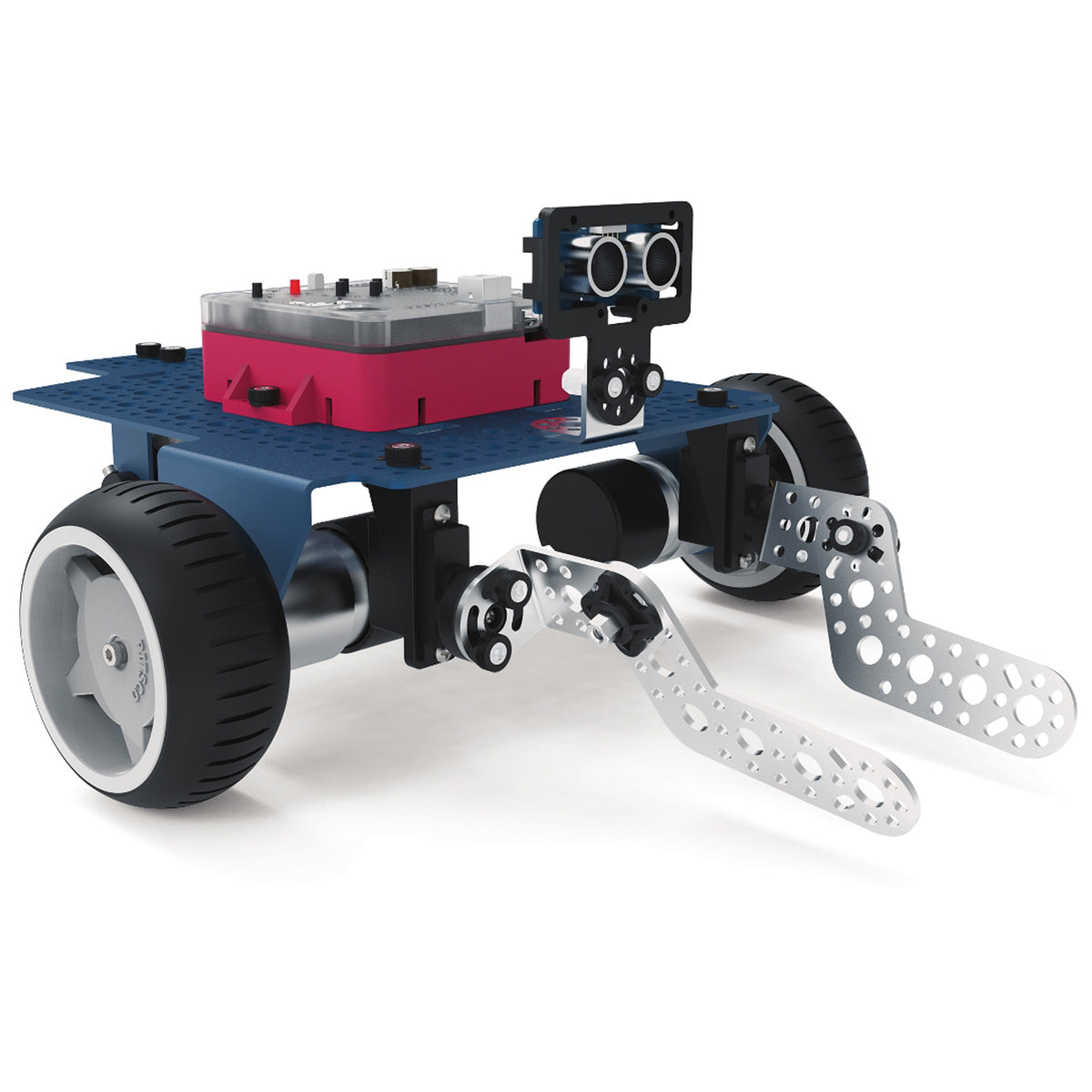
Seeker is a programmable robotics platform students build, code and customize across five progressively challenging units. From grocery delivery algorithms to Mars rover simulations, students learn that real computing happens where code meets the physical world.
Progressive Robotics Curriculum

Progressive Robotics Curriculum

Five units take students from hardware assembly and basic programming through sensor integration, agricultural automation, and a capstone career challenge.

Real-World Mission Contexts

Real-World Mission Contexts

Students program Seeker to deliver groceries, light stages, navigate Mars terrain, tend crops, and sort by color—connecting coding to careers students can imagine.

Capstone Career Challenge

Capstone Career Challenge

Students research an industry, design a custom robotics solution with two Seeker robots, and deliver a seven-to-ten-minute engineering presentation.

Cybersecurity Built In

Cybersecurity Built In

Lessons developed with CYBER.ORG turn passwords, permissions and system logs into something students can test on the robot, inside the units they're already doing.

What Students Will Do

Students do not just program robots—they engineer solutions. Every unit ends with a hands-on challenge that requires coding, debugging, testing, and presenting a working solution.
  • Assemble Seeker in humanoid form and configure servo motors
  • Write and debug programs using block-based coding via USB and Bluetooth
  • Program delivery algorithms with drive, spin, and pivot blocks
  • Create custom lighting sequences using conditional logic and LEDs
  • Navigate Mars terrain using ultrasonic sensors and gesture recognition
  • Build an agricultural robot that detects color and sorts crops

Compare Similar Products

Feature Current Product
Tech Explorers: Physical Computing
Tech Explorers: Intro to Electronics & IoT Tech Explorers: Game Development
Price $5,511.00 $2,528.00 $3,543.00
Primary Focus Robotics and Physical ComputingElectronics and IoT Game Development and Coding
Grade Level Grades 6–8Grades 6–8 Grades 6–8
Curriculum Length 43 class periods40 class periods 44 class periods
Key Platform Seeker RobotArduino boards Mastery Coding + micro:bit
Physical Hardware
Coding Language Block-based + Python-based (Pitsco Learning Portal)Arduino IDE (C/C++) JavaScript + MakeCode
Cybersecurity Lessons ——
AI Assistant Add-On Spark the AI Assistant compatible with Seeker——
Best For Schools wanting a comprehensive robotics program with progressive, mission-based challengesPrograms seeking electronics fundamentals with circuit building and IoT sensor projects Schools wanting a coding-first curriculum blending game design with physical computing
View Details View Details

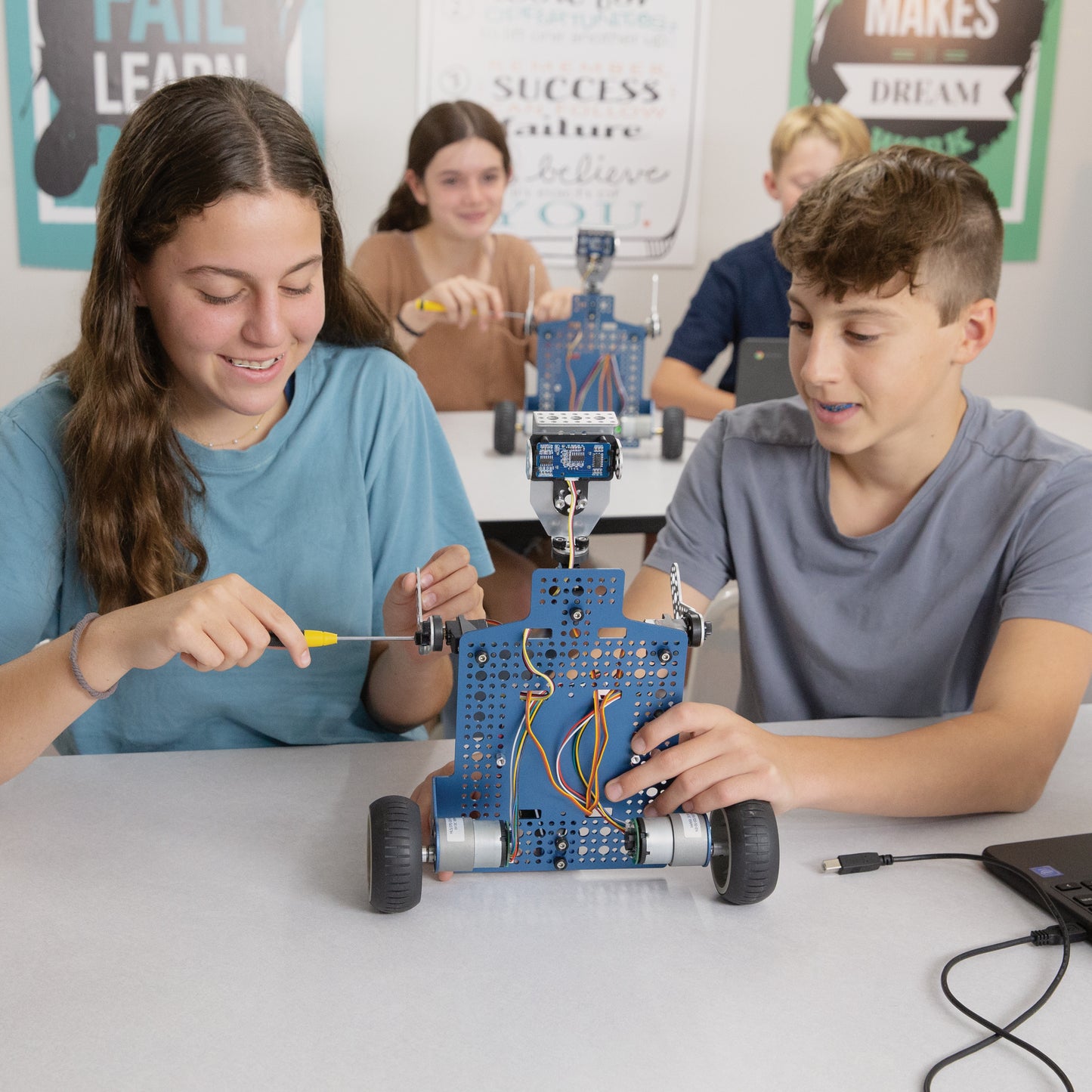
Step 1—Hardware Onboarding: Students build Seeker in humanoid form, connect servos, and run demo programs to explore the robot’s capabilities and subsystems.

Step 2—Software Onboarding: Students learn the Seeker programming app, write pseudocode, create flowcharts, and upload their first programs via USB and Bluetooth.

Step 3—Movement and Delivery: Students program Seeker’s drive, spin, and pivot blocks to complete a grocery delivery challenge—learning algorithms, sequencing, and variables.

Step 4—Lights and Sound: Using conditionals and LEDs, students create custom lighting sequences and sound programs, culminating in a creative performance challenge.

Step 5—Sensors and Exploration: Students reconfigure Seeker for rover mode, program ultrasonic sensors, and complete a Mars simulation challenge with gesture recognition.

Step 6—Agriculture and Career Challenge: Students build agricultural robots with color sensors, then design a capstone career-based robotics solution using two Seeker robots.

Where Code Meets the Physical World

The Tech Explorers: Physical Computing program teaches students that real computing is not just what happens on a screen—it is what happens when code controls motors, reads sensors, and makes decisions in the physical world. Through forty-three class periods of progressively challenging robotics missions, students develop the programming logic, systems thinking, and engineering confidence that define modern technology careers.

Students explore how physical computing supports professionals in fields such as:

  • Robotics engineering and automation
  • Agricultural technology and precision farming
  • Space exploration and rover design
  • Logistics and warehouse automation
  • Entertainment technology and interactive systems
  • Cybersecurity and information security

They do not just learn to code. They code robots that move, sense, and solve real problems.

Science

  • Sensor physics—ultrasonic distance, color detection, time-of-flight measurement
  • Light, sound, and frequency relationships
  • Environmental data collection and analysis
  • Systems thinking—how hardware and software subsystems interact

Technology

  • Block-based programming with the Seeker app
  • USB and Bluetooth connectivity for program upload and debugging
  • Servo motor control and sensor integration
  • Pseudocode, flowcharts, and structured programming concepts
  • Authentication, authorization and access logs

Engineering

  • Building and configuring robotic systems from components
  • Designing algorithms for navigation, delivery, and sorting tasks
  • Debugging hardware and software issues systematically
  • Engineering design process applied to capstone career challenge
  • Testing a system for security weaknesses and fixing them

Math

  • Distance, speed, and time calculations for robot navigation
  • Encoder data and wheel measurements for field calculations
  • Area and perimeter calculations for agricultural applications
  • Data visualization and graphing from servo speed experiments

Unit 1—Onboarding:

  • Hardware Onboarding—Build Seeker in humanoid form, connect servos, run demo programs, apply systems thinking
  • Software Onboarding—Learn the Seeker programming app, write pseudocode, upload first program via USB and Bluetooth
  • Cybersecurity—Passwords and authentication, including why brute-force guessing works.

Unit 2—Movement and Delivery:

  • Doordrop Delivery—Program drive, spin, and pivot blocks to control movement; explore algorithms, sequencing, and variables
  • FarmFresh Grocery—Control servo motors, engineer paper grocery bags, conduct speed experiments, complete Grocery Delivery Challenge
  • Cybersecurity—How risk changes when data is stored, moved or used.

Unit 3—Lights and Sound:

  • Lighting the Stage—Use conditionals to control pixel LEDs, create animations and color combinations, present a custom storm scene
  • Sounding Off—Explore frequency and pitch through sound programming, create sound effects, build a musical keyboard, perform a creative monologue
  • Cybersecurity—Authentication, authorization and system logs, with different users controlling different stage effects.

Unit 4—Sensors and Exploration:

  • Satellite Manufacturing Facility—Reconfigure Seeker for rover mode, program ultrasonic sensors, complete a Transport Challenge
  • Mars Simulation Colony—Use TOF sensors for gesture control, navigate corridors, complete the Mars Rover Challenge
  • Cybersecurity—Intellectual property and fair use as students design Seeker for new jobs.

Unit 5—Agriculture:

  • Encoded Farming—Modify Seeker with sensors and attachments for agricultural tasks, calculate field dimensions, traverse and clear fields
  • Sensing Color—Mount a color sensor and servo arm, distinguish crops from weeds, complete the Tomato Sorting Challenge
  • Cybersecurity—Layered and physical security plans for a whole organization.

Career Challenge:

  • Research an industry, design and build a prototype with two Seeker robots, program tasks using variables, loops, conditionals, and sensors, deliver a seven-to-ten-minute presentation
  • Cybersecurity—Connecting their interests to cybersecurity career pathways.

Why Teachers Love Tech Explorers®: Physical Computing

Forty-Three Class Periods

Forty-Three Class Periods

A full semester of progressive robotics curriculum from onboarding through capstone career challenge.

One Robot Per Pair

One Robot Per Pair

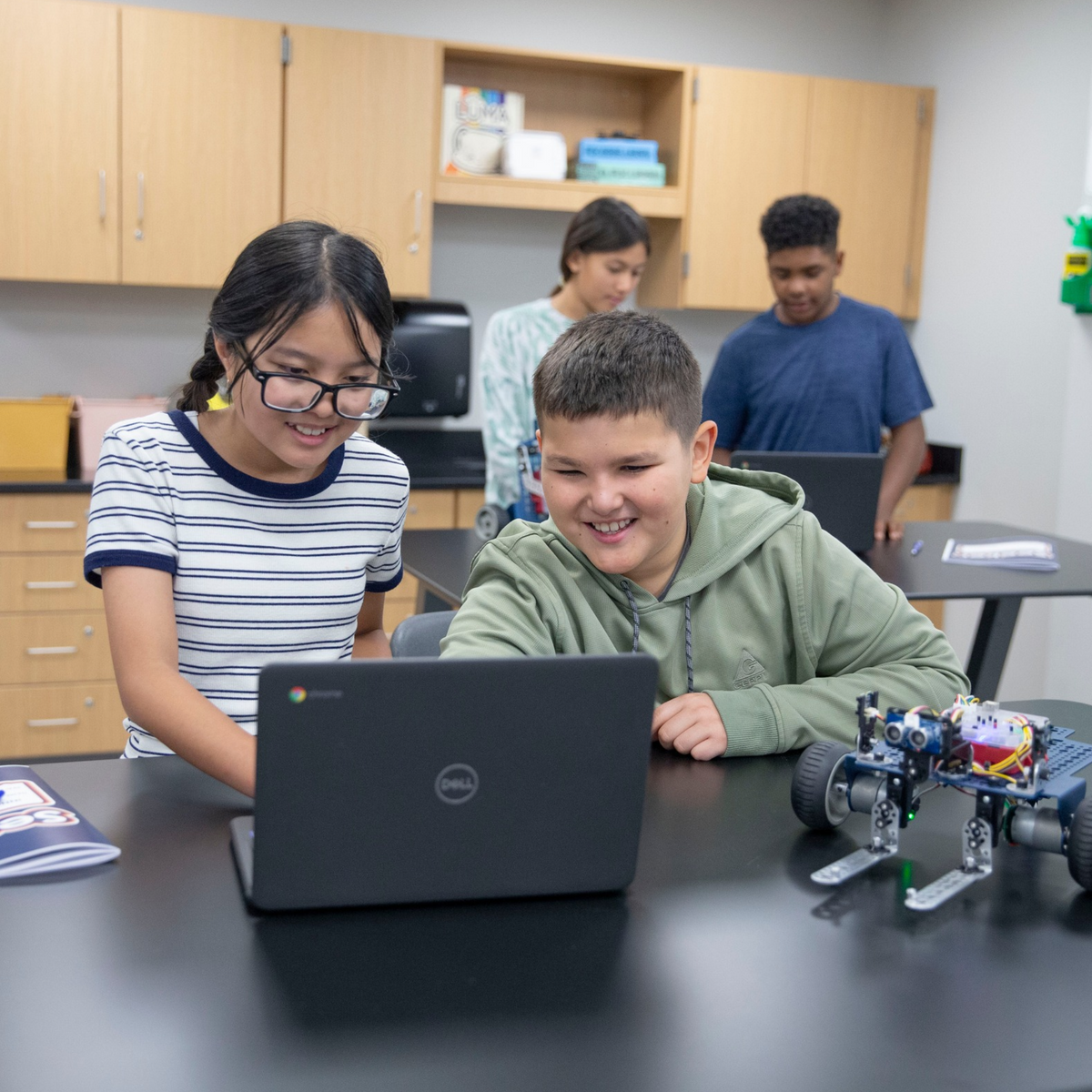
Every student gets direct hands-on coding and building time every class period. No waiting, no watching.

Mission-Based Learning

Mission-Based Learning

Grocery delivery, Mars exploration, agricultural automation, and career challenges give coding real purpose and context.

Sensor-Rich Platform

Sensor-Rich Platform

Ultrasonic, color, and TOF sensors teach students that physical computing is about reading the real world, not just displaying pixels.

Cybersecurity at No Extra Cost

Cybersecurity at No Extra Cost

CYBER.ORG lessons are built into the units you already teach. No new unit to schedule, no new login.

Help When Students Get Stuck

Help When Students Get Stuck

Add Spark the AI Assistant and every student has a guide that asks questions instead of giving answers. One Class License covers all 24 students.

"Your curriculum is deeper. You deliver 21st-century skills that truly teach kids how to not just look at the content but also be able to communicate and work collaboratively. And there is no comparison to your customer service."

—Cary Johnson, K-12 Director of Innovation and Technology, Placentia-Yorba Linda Unified School District, CA

Flexible Purchasing Options

Pricing and volume discounts are built in—choose the path that fits your purchasing process.

Buy Online

Best if you know what you need and can buy online.

Ready to purchase now? Add this to your cart for fast, easy checkout.

Request a Quote

Need a quote for approval or purchase order processing?

Request a quote or connect with an Education Advisor before purchasing.

Request a Quote

Get Expert Guidance

Exploring options or planning a larger implementation?

Our Education Advisors can help with product selection, curriculum, and professional learning.

Book a Meeting

Frequently Asked Questions

What grade levels is this program designed for?

Tech Explorers: Physical Computing is designed for Grades 6–8. The progressive unit structure naturally differentiates—beginners build confidence in Units 1–2 while advanced students are challenged by sensor programming and the capstone project.

Do students need prior coding experience?

No. The curriculum starts with hardware assembly and basic block-based programming, building skills progressively. Students write pseudocode and create flowcharts before uploading their first programs.

What devices do students need for programming?

Seeker connects to classroom computers by USB or Bluetooth. The Pitsco Learning Portal is included with your purchase. It's 100% web-based and runs in Google Chrome or Microsoft Edge on Windows, Chromebook and Mac.

Does this program include cybersecurity?

Yes. Cybersecurity lessons developed in partnership with CYBER.ORG are woven into the Seeker units. Students explore authentication, authorization, data protection and system security by testing them on the robot. No extra cost, logins or setup.

Can I add an AI assistant for my students?

Yes. Spark the AI Assistant is an optional add-on, sold separately. One Class License covers 24 students plus 1 teacher for one year, which matches this program's class size.

How are students grouped?

The program serves twenty-four students working in pairs—twelve Seeker robots means one robot per pair, plus an additional robot for the instructor! Every student gets direct hands-on time with hardware and coding.

What makes this different from other robotics programs?

Seeker’s mission-based curriculum connects coding to real careers—logistics, agriculture, space exploration—rather than abstract programming exercises. The capstone career challenge requires students to research an industry and engineer a custom solution.

Are replacement parts available?

Yes. Seeker components, sensors, and accessories are available separately from Pitsco. The robots are built to withstand classroom use year after year.